In the wake of his latest public relations debacle in April, Sean Eldridge’s Congressional campaign put out a call for applicants to serve as an “experienced, energetic Communications Director to manage the campaign's day-to-day operations of press strategy.”
The development led to yet another satirical blast from Republicans. The GOP seized this as a fresh opportunity to highlight Eldridge’s lack of experience in running for public office, his lack of roots in the district, his overabundance of money to spend on his campaign. and other now-familiar talking points.
Leading the charge was the NRCC’s Ian Prior (himself a former Congressional campaign manager) , who drafted a fake application for the job. Prior used the tongue-in-cheek letter to highlight the GOP’s preferred bullet items: that Eldridge is his own largest campaign donor, that he’s allegedly Hudson River Ventures to curry favor in the district, that he’s bought expensive houses in different districts to “shop” for a winnable race, etc.
Gibson’s people seem to understand that in non-Presidential election cycles, these one-liners are useful (whether fair or not) for motivating the Republican base to turn out—and for helping to dampen Democratic enthusiasm.
Even some Democrats who would like to see the party regain control of the house have grumbled that Eldridge’s missteps are playing into Republican hands, as image and media issues allow Gibson to avoid discussion of votes which might put him out of step with the NY-19 electorate.
One p.r. problem leads to another, as even more balanced articles such as this recent Freeman report consistently highlight Republican accusations about carpetbagging and campaign finance before glancingly addressing the issues at stake.
Eldridge’s challenge now is to undo the Al Gore-ing of his campaign, even as the opposition tries to make his infinity pool into the regional equivalent of 2000’s unfair “I invented the Internet” tag on the then-Vice President.
Meanwhile, though the ad for a new Communications Director is now nearly a month old, recent press releases on Eldridge’s site continue to list the same outside p.r. rep, Morgan Hook of SDK Knickerbocker, as his primary press contact. (The Knickebocker Albany office lists only one other key staffer other than Hook, whereas its New York City office lists 20 Managing Directors, Vice Presidents and Associates.)
So while Eldridge may be belatedly realizing—less than six months from Election Day—that his campaign needs to speak more for itself, and more freely, the intended course-correction appears, like the rest of his campaign, to be a work in progress.
Oppo researchers for Republican Congressional incumbent Chris Gibson got another early Christmas present this week, as Sean Eldridge’s own team handed over more material which helps his opponent paint the Democrat as a standoffish outsider.
The campaign’s latest missteps are detailed by Alex Isenstadt at Politico, in a long piece entitled Chasing Sean Eldridge. Like several other publications, Isenstadt got some rather high-handed treatment from the staff of Eldridge for Congress:
“Congressional challengers typically seek maximum media exposure; Eldridge allows few chance encounters with the media. His campaign frequently posts pictures on his Facebook page of the candidate out and about in the district, but local reporters say they’re usually not made aware of his public schedule ahead of time. He declined to be interviewed by Politico, and the door to his campaign headquarters in Kingston was locked on a recent visit. No one answered a call on an intercom.”
When writing a piece last Fall for The New York Observer about the influx of boldfaceable names into the Hudson Valley this writer got the same brush-off from After another staffer indicated a willingness to talk, Eldridge’s spokesperson Morgan Hook of SDK Knickerbocker declined to make the candidate available for an interview.
Previous to that decision, Eldridge’s staff attempted to get this writer to agree to a gag order as a condition of meeting with with the candidate and other Columbia County residents who have been active in local organizing. On principle, I refused to make any such promise, though I had no prior plans of writing about it. The meeting, whose guest list I had helped assemble, was eventually canceled by the host in frustration.
Eldridge’s latest media blunder has spurred something of a pile-on both nationally and locally. The Washington Postheadlined its own story about the Politico story, “Sean Eldridge teaches a master class in how to fuel a negative story.” Alex Parene of the liberal-leaning Salon agreed, saying that Eldridge “earned his Politico hit piece”:
“Sean Eldridge deserves it. He’s a man with no reason to be in Congress beyond being rich enough to throw money around a district—a district that was his second choice after his first one didn’t pan out. He represents every self-regarding super-rich would-be do-gooder who parachutes into a community with no understanding of the lives of its residents and expects them to recognize his inherent suitability for high office.”
Slatelikewise chose, the headline: “Six Months Into His Campaign, Sean Eldridge Is Still Best Known as a Rich Guy’s Husband.”
Possibly most damaging for Eldridge, in terms of his potential base of support in the 19th Congressional District, are observations from liberal opinion leader Alan Chartock of WAMC—one of the few media members who has managed to obtain a lengthy audience with Eldridge:
Chartock came away without any real sense of the candidate. Eldridge sounded like “what a young person thinks a politician should sound like,” the radio host said in an interview. “He’s right on all the issues, but what I think people are looking for is a person. He’s extremely bright, has all the assets that you need to run. But it’s cookie cutter.”
When Slate, Salon, and WAMC are all questioning the Democratic challenger, there’s a problem. (Though of those three, Chartock is by far the most independent voice.)
The Eldridge campaign likely is gun-shy after its earliest brush with the media, a long New York Times piece last summer which was pounced upon by his opponent, incumbent Chris Gibson.
That article highlighted Eldridge’s initial purchase of a $5 million house in a different Congressional district further south in Garrison. Eldridge and his husband, the near-billionnaire Facebook cofounder Chris Hughes, were married in that house. But after the 18th district was won by Democrat Sean Patrick Maloney, the couple set their sights instead on a $2 million purchase in Accord, in NY-19.
The strong appearance of district-shopping, paired with the Times’ focus on the couple’s youth and wealth, may have convinced Eldridge to avoid the media. The Times also picked up on neighbors’ view of Eldridge as an interloper:
“Amy Shields, a mother of three children who lives a few miles from Mr. Eldridge, cannot get over the fact that he has just moved into town and is already planning a run for Congress. ‘It’s a little bit presumptuous,’ Ms. Shields said. ... How can he expect to represent people he doesn’t know?’”
At this point, Eldridge’s attempt to avoid negative media and control his message by avoiding the press appears to have become counterproductive. The Kingston Daily Freemanpicked up on the Politico piece, amplifiying some of its harsher observations for a local audience.
“Democratic congressional candidate Sean Eldridge is evasive, ‘a little immature,” and “not ready for prime time,” according toa short video profile by Politico, a journalism powerhouse in national political circles. [...] “Isenstadt said the Democratic candidate is surrounded by high-priced campaign professionals who are very protective of him. Isenstadt also said political figures and voters in the district to whom he spoke characterized Eldridge ‘as kind of a stranger to us.’”
Had Eldridge agreed to talk with Politico, no doubt some of these characterizations would still have appeared. But they would have been balanced more by Eldridge’s own positions and spin, and the story would have been far less likely to go viral in other media (and, on Twitter).
Such gaffes are all the more baffling, considering that Hughes is credited with steering Barack Obama’s 2008 online presence, which was in many ways the smartest part of his media campaign.
The surest way to antagonize people who (in Dead Tree Media parlance) buy ink by the barrel is to deny them access. As a result, what began as an initial misstep now has snowballed into a self-created distraction, one which his opponent can use to further paint Eldridge’s campaign as both inexperienced and aloof.
All of this plays into Gibson’s ideal culture war narrative—namely, that a decorated military veteran, district native, and family man who still lives in the middle-class neighborhood where he grew up, gets challenged by a young, rich, haughty interloper born in Canada who is trying to buy a Congressional seat...
Will Eldridge correct course by going on a media charm offensive, or allow this narrative to continue to spiral out of his control?
Some of the biggest ups and downs of the year include:
Biggest Sale of a Small Object: Auctioneer Colin Stair of Stair Galleries in Hudson sold a Tsarist figurine by Fabergé for $5.2 million in October to an undisclosed phone bidder. The figurine was discovered in a Rhinebeck attic.
Wackiest Would-Be Terrorist: County resident (and Kinderhook Elk) Eric Feight was arrested as part of a harebrained plot to build a ray gun intended to beam radiation into mosques, with the apparent crackpot goal of giving Muslims cancer.
Most Avant-Garde New Building in an Historic District: Grigori Fatayev built this handsome black box off Willard Place behind the Allen Street home of painter Tony Thompson. The building now serves as Thompson’s studio.
Most Welcome Threat to Leave the County: Following two catastrophic fires in 2012, and after suing the Town of Ghent for upholding its zoning code in 2013, TCI of NY threatened to move their PCB (mis-) handling business across the river to Coeymans. While many breathed a sigh of relief, reminding TCI to not let the door hit them in the back on the way out, it remains to be seen whether Coeymans will really take on the troubled company. The first weeks of the New Year may provide an answer, as the end date for the postponement of TCI’s lawsuit comes due. The company agreed to drop the suit if they found a new home.
Liveliest Glimpse of Old Hudson: A video of people hanging out and partying in the 7th Street park in the early 1990s was posted by YouTuber Satansdarkmetal.
Most Misleading Local Headline: The Register-Star titled an article about the Board of Supervisors voting to keep on pursuing eminent domain against Meadowgreens owner Carmen Nero: “Board Rejects Eminent Domain Resolution.”
Most Pandering Local Headline: For its article about a local engineer who allegedly “zoned out” while speeding a Metro-North train into a fatal accident around a curve at Spuyten Duyvil, Columbia Paper editor Parry Teasdale used this headline: “Germantown Engineer Assists Crash Probe.”
Most Heartening Turnout at a Public Meeting: Hundreds streamed into the Livingston Town Garage for the first public meeting of Livingston Farmers & Families, which is organizing to alter or stop a massive power line project from Upstate to NYC. The meeting featured the political speech of the year, a ripsnorter by farmer and Town Board member Will Yandik, who seems destined for higher office.
Clumsiest Campaign Rollout: The first major media introduction of newly-minted Hudson Valley resident Sean Eldridge, who is seeking to unseat Congressman Chris Gibson, came in the early Summer pages of the New York Times. But the article mainly provided fodder for his opponent. The Times’ revelations about the cost of Eldridge’s Shokan house, with the implication that he and Facebook zillionnaire Chris Hughes had shopped around for a district to run in, were swiftly followed by an Albany Times-Union exposé of how Eldridge’s campaign was paying area residents $100 a pop to focus group attack messages on Gibson.
Most Revealing Comment by an Official Once Thought to Be More Enlightened: Mistakenly thinking that the press and public had left the room, Hudson Development Corporation director Sheena Salvino denigrated citizens who had come out to support the Community Garden as a “mob.”
Most Revealing Comment by an Official Never Thought to Be More Enlightened: County Economic Development tsar Ken Flood shared his unvarnished opinion with Ghent resident Kevin Delahanty that “restaurants in Hudson and Chatham ... don’t provide good jobs except for the owners.”
Worthiest Ideas Gathering Dust on Some Politician’s Shelf: In July, the Columbia County Emergency Management Council proposed a series of sensible, forward-thinking guidelines to prevent major disasters. Little or nothing has been heard about their recommendations in the six months since.
Ugliest Use of Social Media by an Elected Official: Ghent Town Board member Richard Sardo opined in a Facebook post that MSNBC host (and Berkshire County resident) Rachel Maddow “looks very much like an ugly man.” Sardo, who coupled this assessment of Maddow’s looks with his barely-disguised hots for FOX anchor Megyn Kelly, badly lost his Tea Party bid for Town Supervisor against Republican Mike Benvenuto.
Most Gratifying Told ’Ya So: The Valley Alliance was vindicated as the City of Hudson glumly acknowledged the group’s contention that the people, not Holcim, already owned 4.4 acres along the Waterfront. Research by the Alliance demonstrated that the riverfront lands had been improperly sold in the early 1980s without State approval.
Least Merited Award: Hudson Phoenix president John Tonelli was given the Chamber of Commerce’s “Businessperson of the Year” award in June, just months after announcing the arrival of his plastics extrusion business. But Phoenix seemingly never made any hires, and according to a Chamber source the company had “ceased operations” by November.
Least Festive Street Fest: A car show put on by American Glory’s Joe Fierro, with little or no notification to neighbors, shut down the 300 block of Warren Street on a Spring Saturday, but attracted little interest.
Most Hilarious Banter Between Star Chefs: A New York Magazine article about the opening of Fish & Game featured this exchange between the restaurants’ principals, Zak Pelaccio and Jori Jayne Emde:
Foraging for ingredients turns out to have its limitations. Before long, Pelaccio suggests we give up the mushroom hunt. Emde reluctantly agrees. “I mean, I can smell mushrooms though,” she says, then tells me about recently sniffing her way to ramps. “Zak calls me a hound dog.” She gives an animalistic howl. “It’s weird, that’s the sound I make when we’re having sex.”
“It boosts my self-esteem,” says Pelaccio.
“Like you need it,” she returns.
“We always need it,” Pelaccio says.
Least Effective Tool for Promoting Business: In March, the Columbia County Industrial Develpment Agency (IDA) had to revoke its Payment in Lieu of Taxes (PILOT) plan for fish-breeder Local Ocean, as the company had gone into default. Yet another past Chamber award-winner, the company announced its closing in August.
Lamest Campaign by a Candidate Claiming to be a Skilled Organizer: Hudson’s Victor Mendolia garnered the lowest number of votes of any mayoral candidate in a two-person race in recent memory, possibly in City history. The former City Democratic chair lost his campaign manager in the process of losing to incumbent Bill Hallenbeck, despite Democrats having a massive registration advantage over Republicans, and despite Hallenbeck himself earning fewer votes than his first run. Turnout was almost half of Hudson elections of a decade ago, despite the number of registered voters staying the same. As of August, Mendolia had spent more on restaurant dinners than his campaign had banked up for the Fall campaign.
Most Important Unread Mail: Government records uncovered by Ghent resident Patti Matheney revealed that the Department of Homeland Security had warned local emergency officials of the presence of highly-explosive sodium in the TCI building. But the warning apparently went unheeded, contributing (along with egregious negligence by the company itself) to some 12-15 explosions when water was dumped on the company’s smoldering building. Shamelessly, TCI attorney Bill Better shamelessly tried to use this revelation to deflect responsibility from his client.
Most Confusing Campaign Signage: Road signs for the Taghkanic Republican slate seemed to deliberately conflate 20something candidate Ryan Skoda with his much better-known father, farmer (and sitting Town Board member) Richard Skoda.
Most Concerted Effort to Deny the Obvious: Hudson City Attorney Cheryl Roberts, Alderman Cappy Pierro, Council President Don Moore, and attorney Giff Whitbeck repeatedly attempted to deny that Standard Oil had occupied a key piece of the Hudson Waterfront, even after clear evidence was brought forth to prove it. Roberts, who had incorrectly identified the Standard Oil location, and lectured citizens about being “completely wrong,” even wondered aloud whether oil tanks existed in the 1880s. Moore similarly wagged his finger at the public about “being careful.” Eventually, the Gang of Four could not help acknowleding their mistake, brushing it off with barely a shrug. (Their motivation appeared to be a desire to avoid any investigation into contamination.)
Most Selfish Bogarting of Scarce Public Services: The new Barlow Hotel somehow convinced the City of Hudson to not only build an awning over the sidewalk, but also to grant the business exclusive use of two parking spaces in the 500 block of Warren, ostensibly for loading and unloading of baggage. The request was granted despite the block being the the busiest in Hudson, and there being a vast public parking lot immediately behind the hotel. (This frequent perambulator of that part of the street has yet to see a single guest using the two much-needed spaces for their intended purpose.) The City has not clarified what the criteria are for securing one’s own private parking spaces, but no doubt others would love to get the same special treatment.
Least Dignified Post-Election Email: Claverack resident Chris Lastovicka broke with American election tradition in trashing the Town’s voters in the wake of her partner’s loss of her Supervisor seat. Incumbent Robin Andrews lost by 20 votes to Republican Kippy Weigelt. Lastovicka blamed weekenders whom she claimed did not turn in enough absentee ballots—despite Andrews picking up 60 votes from absentees. No blame was assigned to the candidate herself for failing to take a stand on issues such as TCI or the County Airport, or for opposing both an increase in the State minimum wage and common sense gun regulations.
Most Blatant Media Conflict of Interest: Community radio station WGXC had scheduled an interview with recently-departed Mendolia campaign manager Clay Laugier. But the interview on the @Issue show was abruptly canceled without explanation—the most obvious being that Laugier was likely to be critical of Mendolia—a co-host of the show, on leave at the time.
Most Missed Bar, Bar Owner, and Bar Patron: 2013 brought the sad demise of the Iron Horse bar, its owner Frank Martino, and one of its most loyal patrons—former Hudson Police Commissioner Jeff “Sweeps” Bagnall. Join me in pouring one out tonight, New Year’s Eve, for all three.
The Columbia County Democrats neglected to elect new officers after the September 10th primary, in apparent violation of both State election law and its own Party by-laws.
Section 2–112 (1) of State election regs for party committees states that
every county committee shall within twenty days after its election… meet and organize by electing a chairman, a secretary, a treasurer and such other officers as they may by their rules provide.
In other words, the County committee was supposed to meet and elect new officers by September 30th. This rule is reiterated in the County Dems own internal by-laws. Moreover, within three days after officers are chosen, the State says that
all state and county committees shall file in the office of the state board of elections a certificate stating the names and post office addresses of such officers. County committees and any other committee contained therein shall file a copy of such statement with their county board of elections.
But neither of these steps were taken, which are a necessary precursor to the election of Town chairs for the party.
The State Election Law is not clear about the consequences of failing to meet these deadlines. At best they could be construed to mean that the previously-elected officers continued to serve as fill-ins until a new vote was cast; at worst, it raises a question if any actions taken after September 30th by officers with expired terms was invalid or improper.
It’s also not clear whether the Dems’ oversight was due to forgetfulness or a deliberate effort to postpone any reckoning for the current leadership. A number percentage of prominent Democratic incumbents were unseated in this cycle, such as Claverack Supervisor Robin Andrews and Copake Town Justice Brian Herman.
But at last, the previously-elected County chair, Cyndy Hall, has finally called a meeting—almost three months late—to elect new officers Wednesday at 6 pm at Ghent Town Hall on Route 66. The email announcing the meeting says that “everyone is welcome to run,” though the short notice likely means that few if any new faces will step forward. The leadership (the term is used here lightly) may have had reason to keep the blunder quiet: if a vote is called to fill vacancies, that could mean that any enrolled Democrat could throw their hat in the ring, whether they are an elected Committee member or not.
Bartlett beat Mazzacano by a landslide in today’s Republican primary for Columbia County sheriff. A preliminary Board of Elections tally as of 10 pm on Tuesday had Bartlett winning by more than a 2.5-1 margin, 2,181 to 800.
As of Wednesday morning, that ratio had stayed basically the same with a few more votes added to each candidate, bringing the total closer to 2,569 to 944.
Mendolia at a Trixie’s Whorehouse party (Image: MySpace)
Hudson mayoral hopeful Victor Mendolia had $182.35 on hand in his campaign coffers as of August 9th, according to State online records.
Among expenses reported by the impecunious canddidate were $62.46 for dinner at Club Helsinki, and another $57.36 dinner at Café Le Perche.
The bulk of all donations reported this summer for Mendolia’s “Better for Hudson” committee came from the reserves of the Hudson Democratic Committee, which he chaired until earlier this year. Only five residents of the City of Hudson are named as donors in his most recent campaign filing.
Meanwhile, incumbent Bill Hallenbeck appears to have failed to file any finance report at all with the State in the most recent cycle. This may be because Republican candidates in Columbia County tend to funnel funds through their County committee, rather than a local campaign—or because the Mayor does not consider Mendolia a serious threat—or both.
In the months following its August 2012 inferno, embattled PCB (mis-)handler TCI of NY made two $1,000 political donations, according to public records made available online by The New York State Board of Elections.
The first grand went to the County Republicans on September 5th, 2012, about a month after the fire. The second “large” was given to the County Conservatives in December.
A search of the Board’s electronic records turns up no other political donations by TCI for at least 10 years previous—suggesting a correlation between the fire and the sudden generosity.
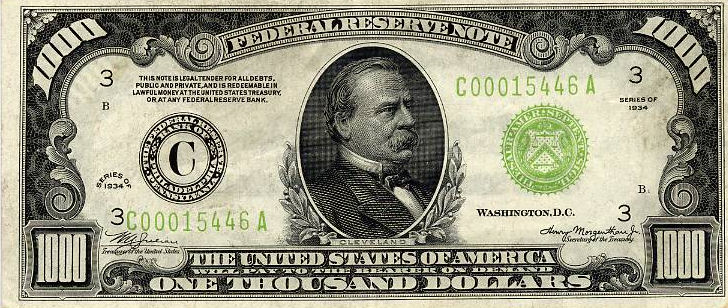
An image of the records search appears below. (Local politics is all about the Clevelands, apparently.)
There appears to be a whole lot more to the story (reported by The Gossips of Rivertown and The Register-Star) of former Mayor Rick Scalera spurning the nomination of the the Hudson Democratic Committee, which he once chaired. Two well-informed Democratic sources offer and confirm the following nuggets, though at this point readers may want to view the following as credible rumor:
(1) Faced with criticism from several aldermen for continuing to support Scalera for 5th Ward Supervisor, even as he embarrassed the Democrats, newly-minted Hudson City Democratic Committee (HCDC) chair Aaron Enfield reportedly resigned yesterday morning.
(2) Enfield’s name was on the Committee to Fill Vacancies for the now-emptied Democratic petitions for 5th Ward Supervisor. But if he refuses to help choose a replacement candidate, that would mean the other two members—said to be Sarah Sterling and Debby Mayer—would have to agree on a substitute, otherwise the Dems will have no 5th Ward Supervisor candidate. NOTE: The Register article claims that the three have already “decided against nominating anyone,” despite Scalera’s repudiation of his party.
(3) Sterling reportedly sent an irate message to several fellow Democrats, denouncing any notion of finding another Democrat to run against Scalera. The 1st Ward Supervisor also is said to have threatened to file some sort of “ethics complaint” against certain aldermen for attempting to “intimidate” the Democratic Committee. (If true, Sterling may want to consider the maxim that politics ain’t beanbag—and that trying to criminalize political speech is not only difficult, but a perilously slippery slope.)
(4) While spurning his own party’s nomination, Scalera may not get the Republican line that he now intends to run on, due to a reported petitioning error. This could leave no candidates on either of the two major party lines for 5th Ward Super, unless someone files Opportunity to Ballot (OTB) petitions in the next few days. OTB petitions would create a write-in primary in either party (or both) in September. Scalera does, however, appear to have the Conservative and Independence party lines sewn up, so he would be on the ballot—just not as a Democrat or Republican.
(5) Democratic Alderman Nick Haddad has been trying to locate former Hudson police chief Ellis Richardson to encourage him to have his name written in for 5th Ward Supervisor. Note that when OTBs are filed, anyone could then have their name volunteered by voters.
(6) On the Mayoral front, Democratic candidate Victor Mendolia reportedly would not have secured the HCDC nomination if even one Committee member had changed his or her vote. Had Enfield stepped off the committee before that vote, the Dems might not have nominated anyone for Mayor.
(7) Several prominent local Democrats have reached out to 1st Ward resident Robert (Bob) Mechling to serve as acting HCDC chair, but he has declined the role, at least for the present... Getting someone to fill the role now may prove difficult, since even before this latest mess, any new chair is going to need a high tolerance for mopping up other people’s puddles.
Indeed, there is still time for anyone to file paperwork to force a write-in primary for any office in the City.
If anyone has further information to add, or disputes the source’s reports, feel free to email this site at [email protected] ...
Greg Fingar may vacate the Columbia County Republican chairman’s seat, and New Lebanon Supervisor Michael Benson may covet his seat cushion, according to three separate (and ideologically-distinct) sources.
GOP chair Greg Fingar with election law attorney James Walsh (Source: CC Scoop)
Fingar remains in the position for the moment, according to a fourth source familiar with the situation. It is not clear whether Fingar would step down voluntarily, or is coming under pressure to do so.
In addition to serving as the New Leb Supervisor, Benson is president of BCI, one of the Capital Region’s largest and most influential construction firms. The company is known for its uncanny knack for winning bidding wars on public projects, and has done extensive work for government within the County. For example, BCI completed renovations for the Chatham Central School District, and also construction on the City of Hudson’s new wastewater treatment plant.
In addition, BCI built A. Colarusso & Sons’ corporate offices, suggesting that if elevated to Republican chair, Benson perhaps would be sympathetic to mining interests which have been the source of some local controversy in the past.
Benson’s profile picture at BCI’s website
Earlier this year, a small controversy erupted after nearly 30 underage students were arrested in relation to a drinking party at a New Lebanon home while the parents were traveling. Initial State Police reports didn’t disclose the party details. But it eventually leaked out that it took place at the Bensons’ home—becoming the subject of reports in the Times-Unionand elsewhere—after the Town Justice had to recuse herself.
Benson contributed $250 to lobbyist, County powerbroker and former Assembly Minority Leader John Faso’s political action committee in 2001, and has donated similar amounts in the past two years to the Columbia County Republican Committee and Conservative Party. In November 2011, he donated $5,000 the State Republican Committee. All of these donations were made via BCI’s Loudonville Road address in Albany.
BCI Construction itself has donated a total of $17,890 to various political candidates over the past decade, according to New York State campaign finance records. Most of these donations were to Republicans, but a few were to Democrats in places such as Albany and New York City where the politics are heavily Democratic.
Though not necessarily over yet, Fingar’s tenure was colored early on by the intense controversy surrounding his party’s heavyhanded 2009 attempt to disenfrancise absentee voters in the hotly-contested Congressional race between Scott Murphy and Jim Tedisco. At the time, Fingar and Faso joined forces to sic lawyers John Ciampoli Jim Walsh (plus a gumshoe private detective) on second home owners who had legally cast absentee ballots. More recent primaries have brought to light various fissures among factions of the County GOP, which usually presents a monolithic front.
The ballot fracas, which was decided strongly in favor of the voters by fellow Republican judge John Nichols, focused heavily on the small Town of Taghkanic. Their challenges appeared to be backed in part by donations from racetrack developer Alan Wilzig—whose chef and manager Eric Tyree was on the ballot. Funds for the disenfranchisement effort came in part from the County Republican Housekeeping fund (to which Wilzig and a corporation he controlled had donated), a type of political action committee which is not supposed to be used for such purposes according to New York State election law.
At the time, numerous residents who were longtime customers of Fingar Insurance decamped to other insurers in protest, after noticing one of its key partners’ involvement. Ironically, the company’s Columbia County Chamber of Commerce blurb touted its work helping to insure second homes.
Assembly candidate Cheryl Roberts has finally conceded the 107th State Assembly race to Steve McLaughin, according to the Troy Record. Roberts’ grudging concession comes a week after McLaughlin declared victory on election night.
In the Record article, a McLaughlin campaign spokesman barely conceals his annoyance with Roberts’ lack of grace in defeat:
“It was very clear on election night that Assemblyman McLaughlin won re-election and was given the honor to serve another term in the state assembly... There was certainly no need to drag this out an additional six days when the obvious had already been stated when Steve had won by a margin far exceeding any need for a recount.”
Roberts had previously insisted that all absentee ballots be counted before she acknowledge the result, though numbers gathered from various Boards of Elections by this site a week ago made it obvious that the challenger had virtually no chance to catch up. The challenger would have had to garner almost 4 out of every 5 absentee ballot filed, even though 3 out of 4 of those ballots came from Rensselaer County, where McLaughlin won handily on the machine.
Roberts was cited for circulating dishonest literature against McLaughlin by the League of Women voters’ non-partisan Fair Campaign Practices organization. She campaigned as an environmental champion, despite having advocated one-sidedly for the interests of Swiss industrial polluter Holcim and notorious Connecticut construction firm O&G Industries over thousands of citizen concerns about the future of Hudson’s South Bay.
Nevertheless, Columbia County Democratic officials cynically promoted Roberts’ green bona fides using the (now-disproven) rationale that “she can win”—the same reason given for the party’s switch of its allegiance from progressive Congressional candidate Joel Tyner to CIA lawyer Julian Schreibman. Roberts reportedly wasted more than $100,000 in campaign funding from the Democratic Assembly Campaign Committee, while Schreibman ran through $1 million on his race, not counting expenditures by outside groups.